
 Trustpilot
Moving to Portugal:
all residency options
 We match you with the right Portugal residency route for your income, work and family
- Legal support for your move to Portugal at every stage
- After 5 years: permanent residency, then a path to EU citizenship


Programs Portugal residence permits
Which Portugal residence permit fits depends on what you will live on: remote work, passive income, study, your own business or investment. Compare the programs below or let us review your case on a call.
Digital Nomad Visa (D8)
Remote income from €3,680 a month, family can apply together with youOur supportfrom €1,250Passive incomeD7 Visa
Passive income from €920 a month: rent, dividends, royaltiesOur supportfrom €1,250StudyStudy courses
Language and professional courses, almost entirely onlineOur supportfrom €750Own businessD2 Visa
Income from €920 a month and a business plan, no degree requiredOur supportfrom €1,850InvestmentGolden Visa
Investment in funds, research, culture or business; you don't have to live in PortugalInvestmentfunds from €500,000Higher educationUniversity study (D4)
Bank statement of €11,040, permanent residency after 5 yearsOur supportfrom €1,250EmploymentD3 Visa and 90.2 permit
Job contract paying from €2,100 a month after taxOur supportfrom €1,850Pros and cons of living in Portugal
What to know before moving to Portugal, so you can choose a city and a residency program without surprises.


Pros of moving to Portugal
- One of the safest countries in Europe, with a calm, unhurried pace of life.
- Mild climate: warm summers, frost-free winters and almost 1,000 km of Atlantic coastline.
- Many Portuguese, especially young people, speak good English, so you can manage without Portuguese at first.
- Affordable by Western European standards: groceries, cafés and transport cost less than in France or Germany.
- Dual citizenship is allowed: you can get an EU passport without giving up your own.
- A large international community in Lisbon, Porto and the Algarve, plenty of coworking spaces and English-speaking professionals.
- Free public healthcare and schools for residents.
Cons of moving to Portugal
- Rents in Lisbon and Porto have risen sharply: new leases in Lisbon average €17–18 per m².
- The immigration agency AIMA is overloaded, so appointments and renewals can take months.
- Salaries are below the EU average, so it's easier to move with remote or passive income.
- Homes are often poorly insulated, so flats can feel damp and cold in winter.
- Bureaucracy and a slow pace: many matters can only be handled in person and by appointment.
Life in Portugal
Portugal is one of the calmest and safest countries in the EU: a mild Atlantic climate, the ocean, an unhurried pace of life and a large international community in Lisbon, Porto and the Algarve.
WeatherWarm, dry summers and mild, rainy winters without frost. In the south, the Algarve is sunny almost all year round.
Quality of lifeSafe cities, good roads and internet, plenty of coworking spaces and international schools.
ExpensesGroceries, cafés and transport cost less than in France or Germany. Rent is the biggest expense.
Housing in Portugal
Long-term rentals are available in Portugal, but the market is tight, especially in Lisbon and Porto. What to know:
- leases are usually signed for a year or longer and registered with the tax office. For the D7 and Digital Nomad visas, a lease or other proof of accommodation is already needed when you apply for the visa;
- landlords often ask for a guarantor (fiador) or several months upfront, plus a deposit (caução), usually 1–2 months' rent;
- many people rent for 1–3 months at first and look for a permanent home once they arrive.
How listings are described
Apartments are labelled with T and the number of bedrooms: T0 is a studio, T1 has one bedroom and a living room, T2 has two bedrooms.
Rental prices
According to the national statistics institute INE, in Q2 2026 the median rent on new leases was about €10 per m² nationwide and almost €18 per m² in Lisbon. Housing is cheapest in smaller towns and inland.
Utilities
Electricity, water, gas and internet are usually paid separately from the rent. Bills go up in winter because of heating: older buildings usually have no central heating.
Where to look
- Idealista
- Imovirtual
- Casa Sapo
- Airbnb — for the first weeks
Healthcare in Portugal
Portugal has a national health service, the SNS. Once you have a residence permit, you register at your local health centre (Centro de Saúde), get a user number (número de utente) and a family doctor. Routine care in the public system is mostly free or low-cost for residents.
The downside of public healthcare is waiting times for specialists. That's why many residents take out private insurance: it gives quick access to private clinics, and big cities have English-speaking doctors.
What matters for your permit
- for the visa you need health insurance that covers you until you get access to the SNS;
- children and pregnant women receive care in the public system;
- medicines prescribed by an SNS doctor are partly reimbursed by the state.
Education in Portugal
School is compulsory in Portugal until age 18 or the end of 12th grade. Public schools are free for residents and teach in Portuguese. The stages are:
- preschool — up to age 6;
- basic education — grades 1 to 9, in three cycles;
- secondary — grades 10 to 12, general or vocational.
Lisbon, Cascais, Porto and the Algarve have many international schools teaching in English, but they charge fees.
School-age children can get a Portugal residence permit based on school enrolment.
Higher education
- bachelor's degree — Licenciatura, usually 3 years;
- master's degree — Mestrado, 1.5–2 years;
- doctorate — Doutoramento.
Portuguese degrees are recognised across the EU. Study is also grounds for residency: see the study programs above.
Permit types in Portugal
A Portuguese residence permit is issued on specific grounds: remote work, passive income, study, your own business, employment or investment. The route is almost always the same: first a national visa at a consulate, then a residence permit from the immigration agency AIMA in Portugal. For most programs the first permit is issued for 2 years and renewed for 3, and after 5 years you can apply for permanent residency.
Digital Nomad Visa (D8)
- Who it's for
- Remote employees of foreign companies and freelancers with foreign clients
- Income
- 4 times Portugal's minimum wage — from €3,680 a month for the last 3 months; we recommend showing €3,800 or more
- Validity
- A 2-year permit with the right to work, then a 3-year renewal
- Where to apply
- Visa at a consulate, then the residence permit at AIMA
Income can come from an employment contract or from providing services, and it must be taxed. You need to prove tax residency outside Portugal. Your family applies together with you: savings of €5,500 for a second adult and €3,300 per child. You don't need a Portuguese bank account to apply. There is also a temporary option — a visa of up to 1 year without a residence permit.
Passive income visa (D7)
- Who it's for
- People with regular passive income: rent, dividends, royalties, interest
- Income
- Passive income from €920 a month
- Validity
- A 2-year permit with the right to work, then a 3-year renewal
- Where to apply
- Visa at a consulate, then the residence permit at AIMA
Income is proven with contracts and deposits to your account; the consulate usually looks at roughly the last 6 months. Your family applies for the visa and permit together with the main applicant, and after 5 years you can apply for permanent residency.
Residence through study courses
- Who it's for
- People who want to move through language or professional courses
- Study
- Almost entirely online, in English, 12–18 months, start any time
- Language
- No Portuguese required
The simplest study route. It's easy to combine with remote work, and later you can switch grounds — for example to employment or the Digital Nomad Visa.
University study (D4 visa)
- Who it's for
- People enrolling at a Portuguese university
- Funds
- Bank statement of €11,040
- Validity
- A 2-year permit, in some cases +1 year to look for work — up to 3 years of first residency
You can move with your family and combine study with remote work. After 5 years you can apply for permanent residency.
Entrepreneur and freelancer visa (D2)
- Who it's for
- Freelancers and entrepreneurs who want to work through a Portuguese sole proprietorship or company
- Requirements
- Income from €920 a month and a business plan, no degree required
- Validity
- A 2-year permit renewed for 3 years, processing ~7–8 months
An alternative to the Digital Nomad Visa for those who work as self-employed. Your family moves with you, and after 5 years you can apply for permanent residency.
Golden Visa (residency by investment)
- Who it's for
- Investors who want the right to live in the EU without relocating
- Amount
- From €500,000 in investment funds or research; €250,000 as a non-refundable donation to culture
- Stay requirement
- 7 days in the first year and 14 days every two years after that
- Validity
- Investment held for 5 years, a 2-year permit renewed for 3
Since October 2023, buying property no longer qualifies for the Golden Visa. The other investment options remain open.
Startup visa
- Who it's for
- Teams of 1 to 5 people over 18, with their families
- Requirements
- An innovative, scalable project or idea with a business plan and an incubator; about €6,000 per person per year in the bank
- Our support
- from €2,500
Suits those who want to build their own product in Portugal.
Employment (D3 visa and 90.2 permit)
- Who it's for
- People with a contract or offer from a Portuguese employer
- Salary
- From €2,100 a month after tax
- Requirements
- A role matching your education or experience, a one-year lease, a NIF
Without a university degree, experience is proven with employment records, contracts and employer letters. You don't need a Portuguese bank account with a deposit. Relocation support for specialists includes an audit of the contract and the case.
Other routes
- Moving via a Slovenian residence permit — for those who already hold a Slovenian residence permit.
How to get Portuguese residency
- Choose your grounds
The permit depends on what you will live on: remote work, passive income, study, your own business or investment.
- Get a NIF
A tax number (NIF) is needed at the start of your move. On a call we'll go through the order of steps and the requirements for your case.
- Gather documents
Your criminal record certificate is apostilled and translated into Portuguese. You need proof of income or funds and insurance, and for the D3 — a lease.
- Get the visa
Apply for a national visa at the Portuguese consulate or visa centre in your country of residence.
- Apply for the permit at AIMA
After arrival, give your biometrics at the immigration agency AIMA and receive a 2-year residence card.
- Renew and build up time
After 2 years the permit is renewed for 3 years or changed to another type. After 5 years you can apply for permanent residency, after 10 years — for citizenship.
Documents for Portuguese residency
The exact list depends on the program and the consulate, but the core set is almost always:
- Passport and copies of all pages
- National visa application form and photos
- Tax number NIF
- Proof of income: bank statements, contracts, pension, rental or dividend documents
- Apostilled criminal record certificate with a Portuguese translation
- Health insurance
- For the Digital Nomad Visa — a contract with your employer or clients
- For study — proof of enrolment; for university — a bank statement of €11,040
- For the D3 — a contract with a Portuguese employer and a one-year lease
After you get the permit you will need a social security number NISS — it's required for work, self-employment and access to healthcare.
Costs of Portuguese residency
Costs are made up of fees, document preparation and legal support. Your income and savings are not a cost but a requirement: you only need to prove them.
| Item | Amount |
|---|---|
| Consular visa fee | Per the consulate's or visa centre's rates |
| AIMA residence permit fee | Paid when you apply for the residence card |
| Apostille and translation | Depends on the number of documents |
| Health insurance | Until you get access to the SNS |
| IMIGRATA support | Digital Nomad — from €1,250, D7 — from €1,250, courses — from €750, university (D4) — from €1,250, D2 — from €1,850, D3 — from €1,850, startup visa — from €2,500 |
Taxes for Portuguese residents
If you spend more than 183 days a year in Portugal or your main home is there, you become a tax resident and pay personal income tax (IRS) on worldwide income. Rates are progressive, from 12.5% to 48%.
The NHR regime is closed to new applicants. It has been replaced by IFICI with a 20% rate, but only for certain qualified professions and activities. Freelancers can register as self-employed (atividade aberta), in which case tax is calculated on only part of their income. Student residency does not involve mandatory tax payments. It's best to calculate your tax burden with a tax adviser before moving — this consultation is included in our ALL INCLUSIVE package.
Refusals: common reasons
- Income below the threshold or not documented from a stable source
- For the Digital Nomad Visa — no proof of tax residency outside Portugal, or untaxed income
- For the D3 — the job in the contract does not match your education or experience
- Documents without an apostille, without a translation or expired
- A profile that doesn't fit the grounds: for example, employment income instead of passive income for the D7
Processing times can drag on. In such cases our lawyer advises on legal ways to protect your interests.
Permanent residency and Portuguese citizenship
After 5 years of legal residence on a residence permit you can apply for permanent residency in Portugal.
Under the citizenship law in force since May 2026, you can apply for citizenship after 10 years of residence; citizens of EU and Portuguese-speaking (CPLP) countries after 7 years.
Requirements and the application process are explained on the page Portuguese citizenship by naturalisation.
Portugal residency programs compared
Your case will be handled by

Ilya Gorodetsky
Ilya leads our Portugal visa service and knows the digital nomad and passive income programs inside out. He lives in Portugal and has been helping clients relocate since 2020, with more than 100 successful moves last year alone.
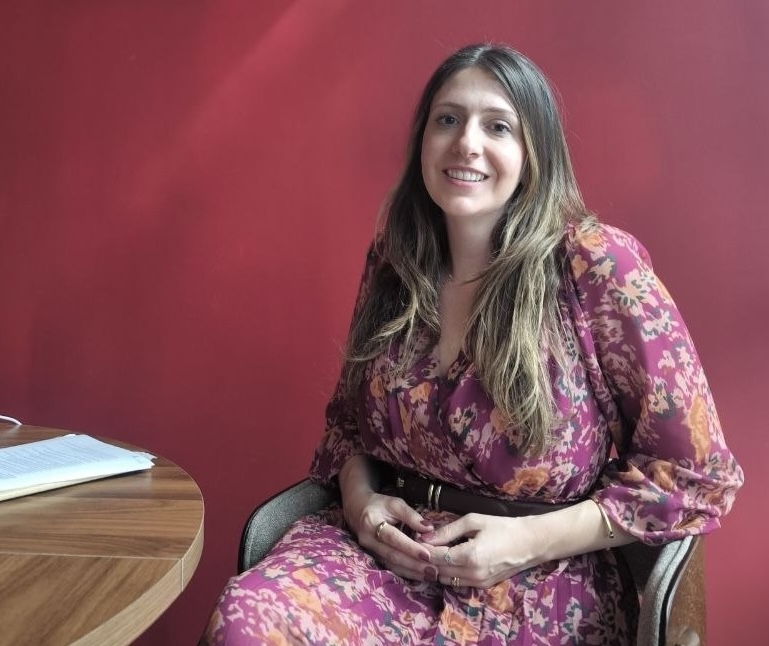
Vitoria Valente
Vitoria is a licensed Portuguese lawyer, licence numbers: Advogada (OAB-SP 368.030) and (OA Portugal 60690L). She represents our clients in Portuguese courts and advises on EU immigration procedures.
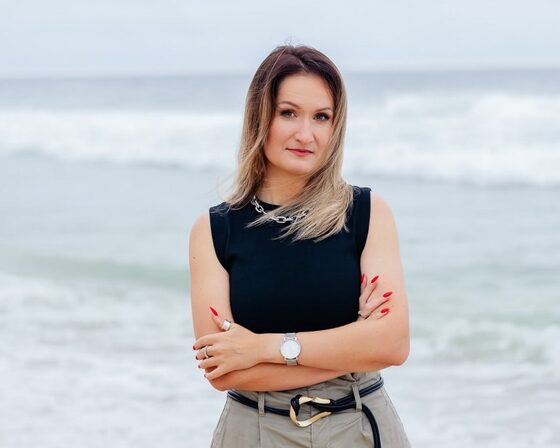
Alexandra Kulikova
Alexandra is a Portuguese immigration expert specialising in the Digital Nomad Visa, D3/90.2, D7, D2, family reunification and other visa types.
Portugal residency FAQ
What types of residence permits are there in Portugal?
The main routes are the Digital Nomad Visa (D8) for remote workers, the D7 for people living on passive income, study-based residency through courses or university, the D2 for entrepreneurs and freelancers, the startup visa, employment (D3) and the Golden Visa for investors.
Which Portugal residency program should I choose?
It depends on your source of income. If you work remotely and earn from €3,680 a month — Digital Nomad Visa; if you live on passive income from €920 a month — D7; if you want to work through your own business — D2; if you have a contract with a Portuguese employer — D3; if you're going to study — courses or university. Not sure? We'll review your situation on a call.
Can I get Portuguese residency by buying property?
No. Since October 2023, buying property no longer qualifies for the Golden Visa. Other investment options remain: from €500,000 in investment funds or research, or a €250,000 non-refundable donation to culture.
Can I apply for residency while in Portugal?
As a rule, no: you first get a national visa at the consulate in your country of residence, and then use it to apply for the residence permit at AIMA in Portugal.
How much does Portuguese residency cost?
IMIGRATA support starts from €750 depending on the program: courses — from €750, Digital Nomad and D7 — from €1,250, D2 and D3 — from €1,850. Consular and AIMA fees, translations and insurance are paid separately — we'll calculate them on a call.
Do I need to speak Portuguese to get residency?
No Portuguese is required for the main programs — study courses, for example, are taught in English. It will help with daily life in the country.
How many years until permanent residency and citizenship in Portugal?
Permanent residency — after 5 years on a temporary permit. Citizenship under the 2026 law — after 10 years of legal residence for most foreigners and after 7 years for citizens of EU and Portuguese-speaking countries.
Can I move with my family?
Yes. On the Digital Nomad Visa, D7 and D2, your family applies for the visa and permit together with the main applicant. For the Digital Nomad Visa you also need savings of €5,500 for a second adult and €3,300 per child. To move with a partner you need an official marriage registered in any country.
Is the NHR tax regime still available?
NHR is closed to new applicants. It has been replaced by IFICI with a 20% rate, but only for certain qualified professions and activities.
What if my case is delayed?
AIMA processing times can indeed be long. Our Portuguese lawyer can file a lawsuit to secure an appointment or speed up a decision on your case.
Can US, UK and other non-EU citizens apply for Portuguese residency?
Yes, on the same grounds as all non-EU nationals: you apply for a national visa at the Portuguese consulate or visa centre in your country of residence. Your criminal record certificate is apostilled and translated into Portuguese, and your income is proven with bank statements and contracts that clearly show its source and amount.
Book a consultation on moving to Portugal
45 minutes of in-depth conversation — a great way to take a big step towards your move.